This guide explains how to complete a submission accurately. The goal is consistent, observable documentation — the kind that holds up when a hundred different people photograph a hundred different buildings across a year.
The field observation is where you describe what you saw. The ratings are where your interpretation goes. Keep those two things separate and the data stays clean.
The one rule that governs everything
Document only what is visible from the public right-of-way — without entering the property or approaching the building.
This study is built around what a stranger passing by would see. If you had to turn into a driveway, walk up to an entrance, or go around the building to find the signage, note what you found in your observation, but answer No to the street visibility question. The distinction between what's visible from the sidewalk and what's visible once you're on the property is part of what this documentation captures.
What to photograph
Photograph the exterior of the building from the street or public sidewalk. If there is no visible signage, photograph it anyway and submit. An absence of signage is a data point. The study needs both.
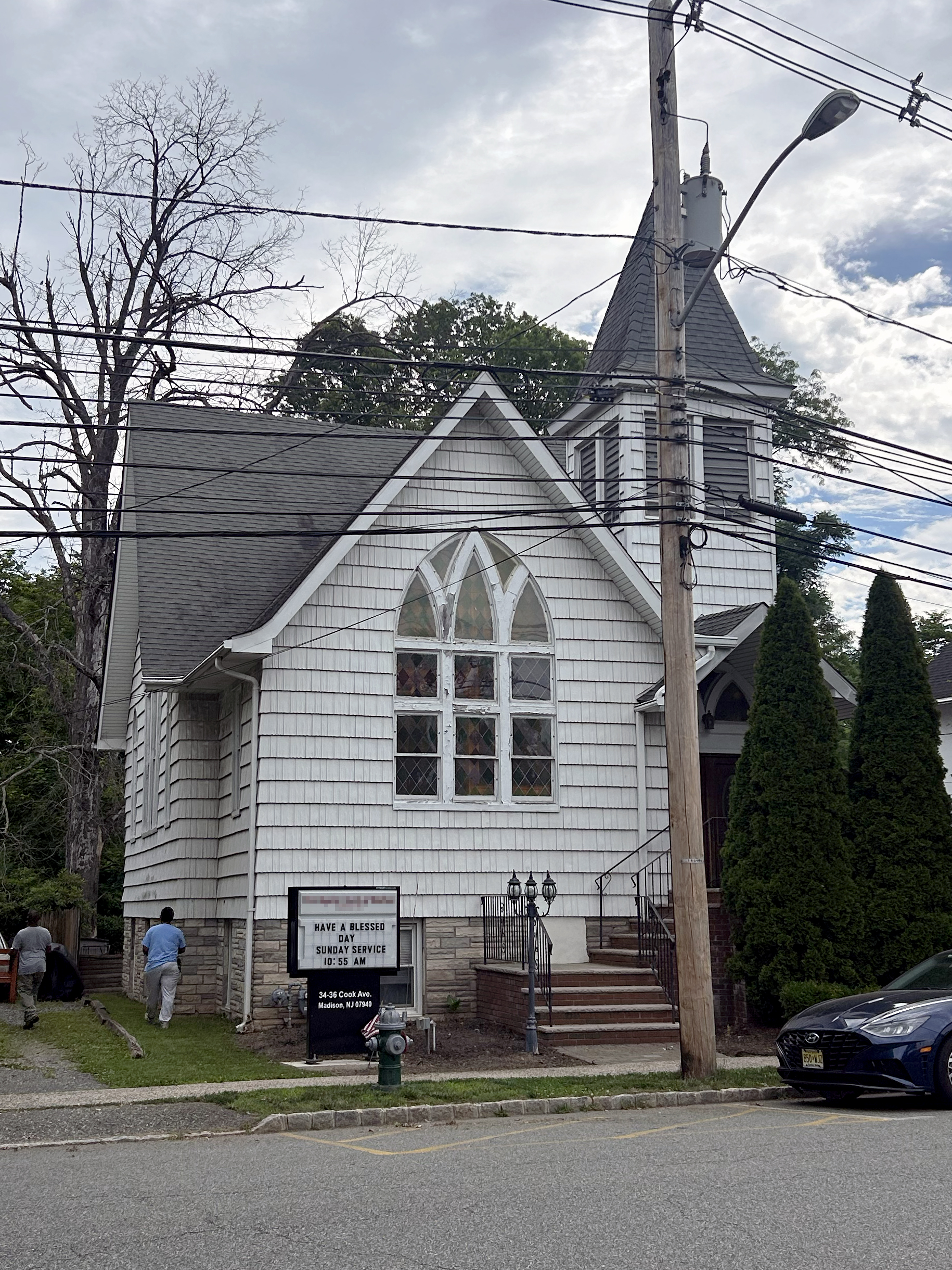
Answer No to the street visibility question. Describe what is there: the church sign, the building, anything on the exterior. A complete observation of nothing is still useful.
The Yes/No question
The first rating asks whether any pride-related signage is visible from the public right-of-way without entering the property. Here is how to think through it.
Yes: A flag, banner, or sign with pride imagery or welcome language is visible from the sidewalk or street without approaching the building.
No: There is no such signage, or any signage present requires entering the property, approaching the entrance, or going around the building to see.
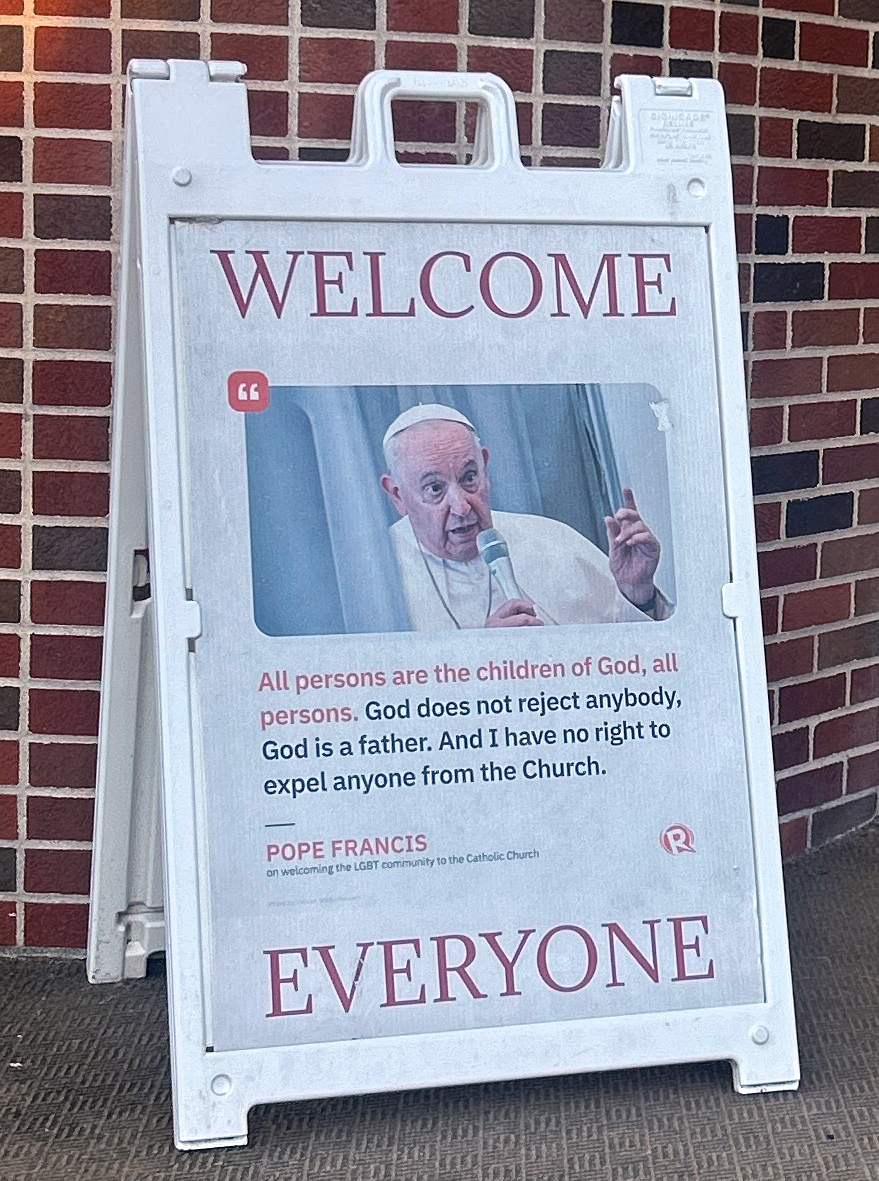
This sign contains an LGBT reference — but only if you walk up and lean in to read it. From the street, it reads as general welcome language. Answer No, describe what you found, and note that closer inspection revealed the attribution. That information belongs in your observation.
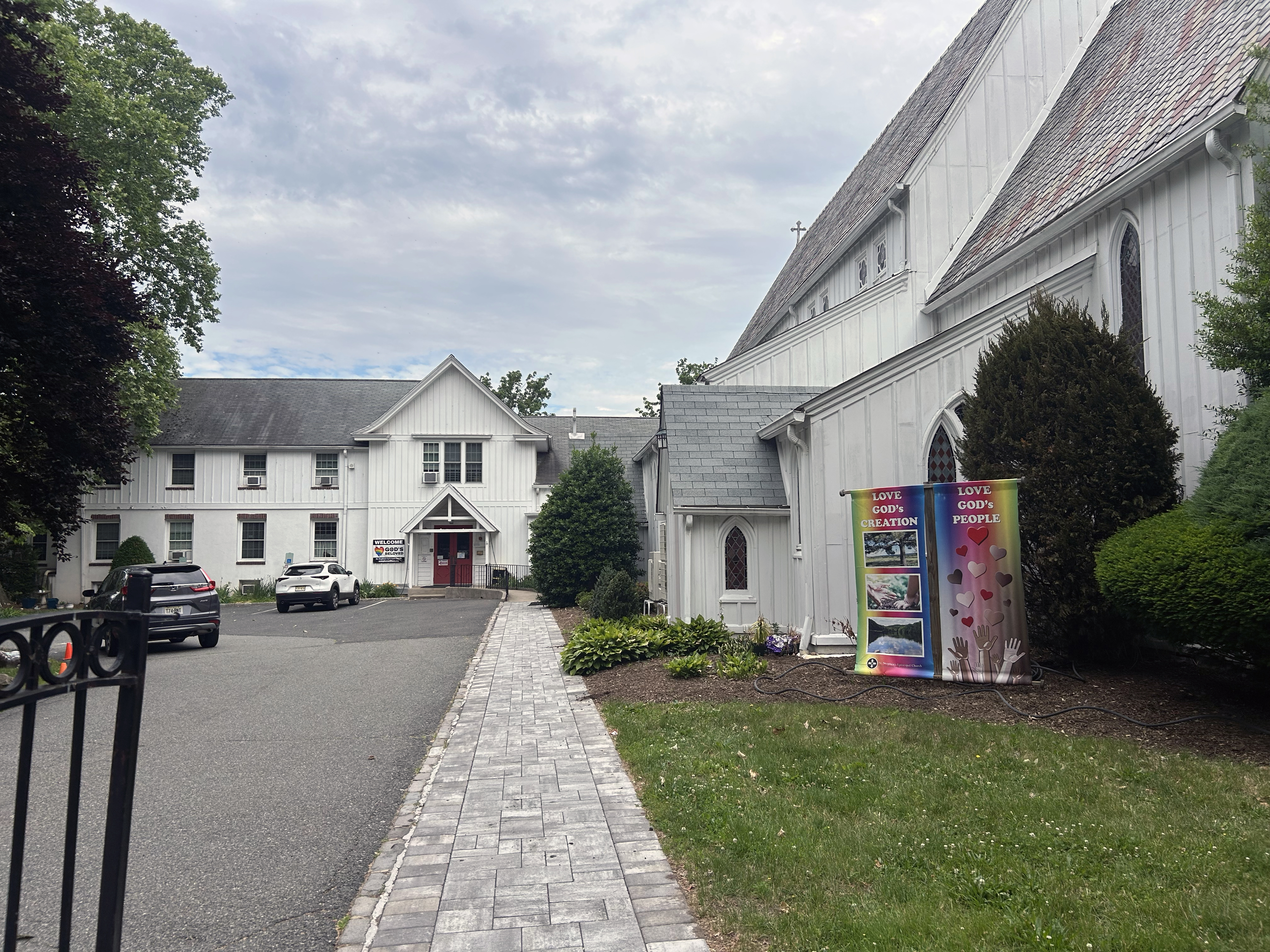
Answer Yes — the banners are visible from a public right-of-way, even if not from the primary entrance. Describe which street the signage faces and what the primary facade shows. A building with multiple street frontages may tell different stories depending on which direction you approach from. Document what you can see from where you are standing.
The four audience categories
If you answer Yes, you will be asked to choose one of four categories describing what the signage says about its intended audience. Here is what each one means, with examples from actual submissions.
Symbol only — Pride flag, rainbow imagery, or pride colors. No text identifying a community.
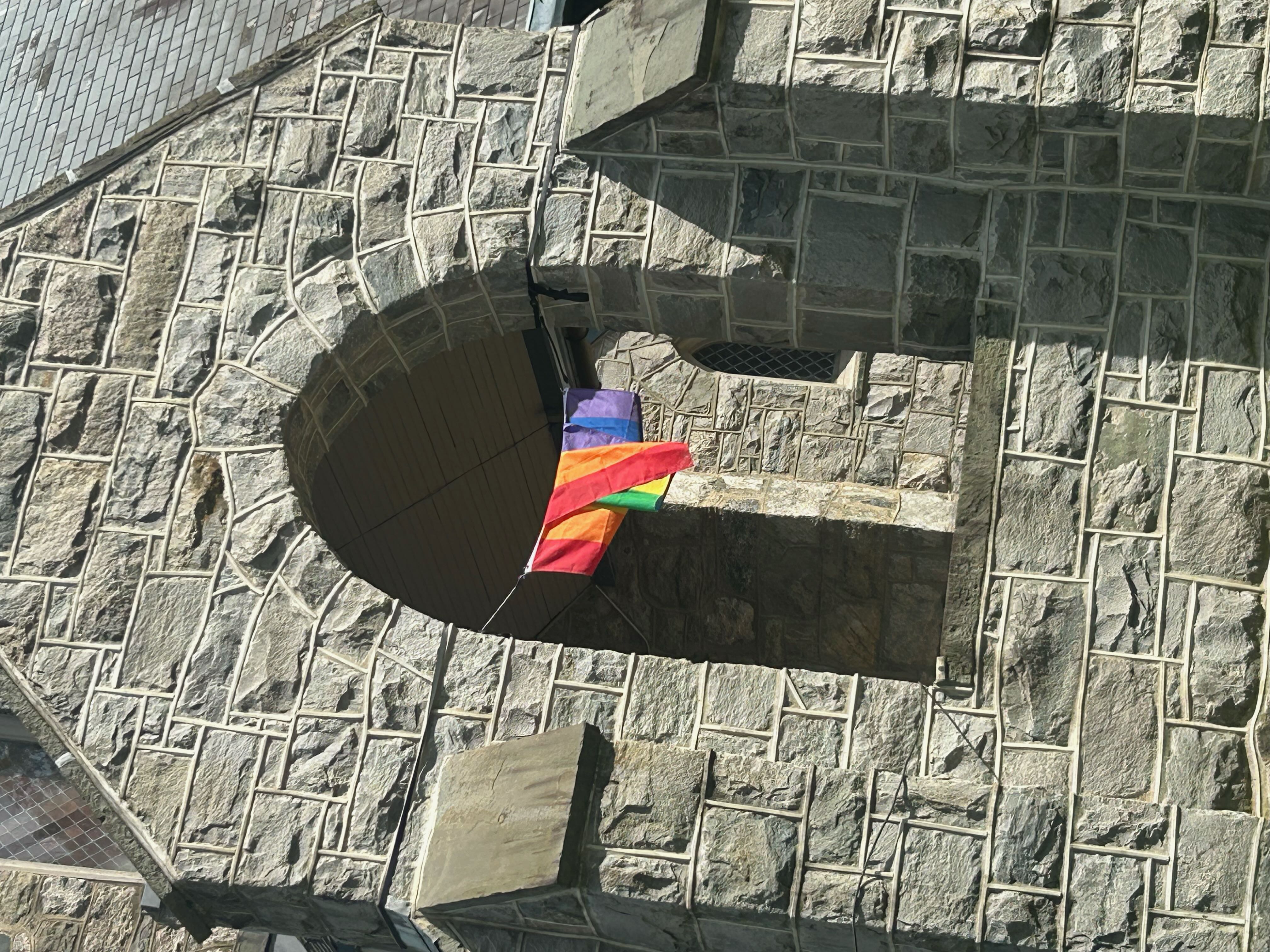
Colorful flags on poles facing the street, no text — also Symbol only. The imagery signals something; the absence of text means it does not name who it is for.
General language — A welcome statement with no named group. "All are welcome," "God loves everyone," service times with a welcoming phrase.
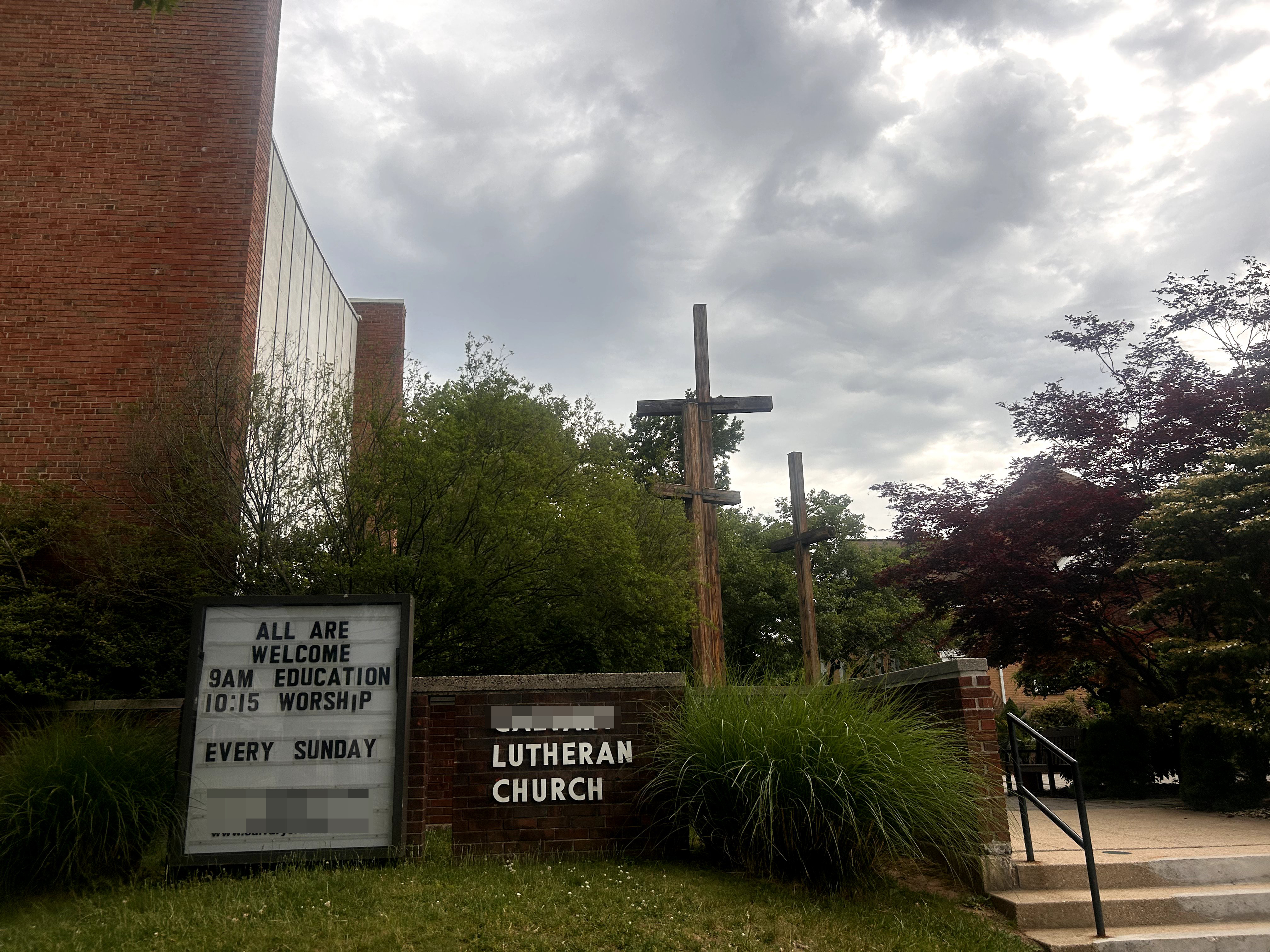
Welcome language, no named community, no pride imagery. General language.
Implied welcome — Language or imagery that suggests LGBTQ+ inclusion without stating it directly. Denominational phrases like "Open and Affirming" or "Reconciling Congregation." Rainbow imagery combined with welcome language that stops short of naming.
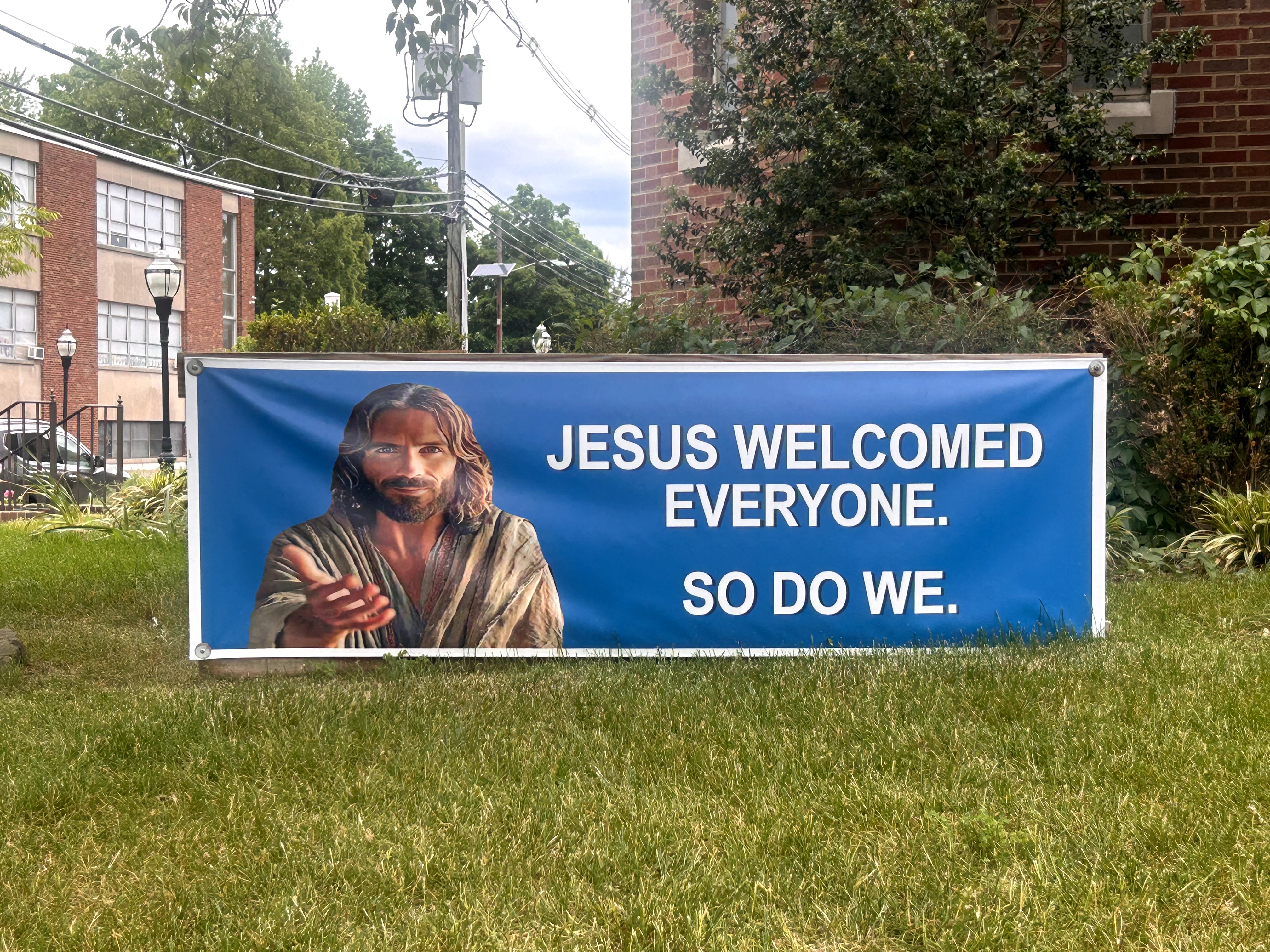
General theological welcome with implied inclusion — no named group. Implied welcome. A banner reading "Open Hearts, Open Minds, Open Doors" with a Progress Pride flag would also fall here.
Named — The signage explicitly identifies the LGBTQ+ community in text.
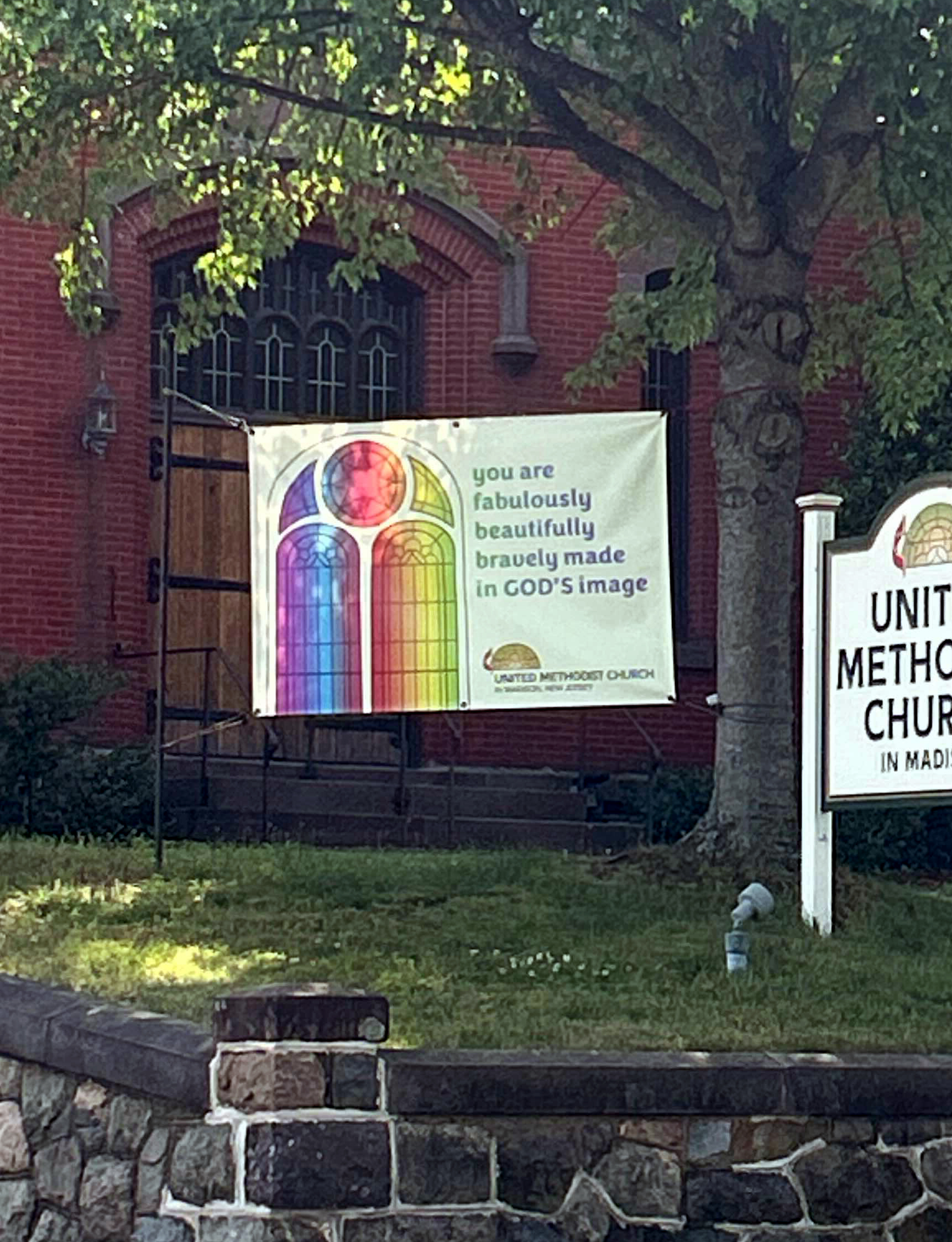
The language is addressed to a person who might wonder if they belong. Combined with the rainbow imagery, this reads as a named address to the LGBTQ+ community even without using those words directly. Use your judgment — and note your reasoning in the observation if it is not obvious.
Visibility: Secondary, Visible, Prominent
The visibility slider asks how prominent the placement is. This is about physical position and scale, not about how much you think the congregation cares.
Secondary (1–3): Present but not the first thing you see. A flag in a window, a small yard sign, a banner partially obscured by landscaping.
Visible (4–6): Clearly present and legible from the street, but not the dominant visual element of the exterior.
Prominent (7–10): The signage is the first or most visible thing about the exterior. A large street-facing banner, a marquee sign with no other competing elements, a flag on a pole at the front of the property.
Writing the field observation
Describe what you see, not what you feel or predict. The observation field is a physical record, not a reaction.
What belongs: What the sign says, word for word if possible. What it shows. What kind of sign it is — banner, sandwich board, flag, yard sign, window display. Where on the property it is. Whether it is visible from the street. Its condition — legible, faded, partially folded, obscured.
What doesn't belong: Your emotional response. Your opinion of the congregation. Your history with the building. Your predictions about what they believe.
Prior context: If you know this congregation and have seen their signage before, that information is useful — but label it clearly. Write: Prior context: [what you know]. That keeps observation and context distinct in the data.
If someone approaches you
Taking photos of a house of worship from the street is legal and unremarkable in most contexts, but occasionally someone will approach and ask what you are doing. If that happens, this is enough:
That is accurate, complete, and gives enough context to satisfy most questions without opening a longer conversation. You are not obligated to say more.
A note on congregation names
Pride Unfurled documents regional patterns, not individual buildings. The public record shows denomination, county, and state only. The precise location is stored for research purposes but not displayed publicly.
When entering location manually, you can use the institution name, street address, or city and state — whichever gets you the most precise map placement. The name or address you enter is never saved. Only the map coordinates are stored, and those are used for research purposes only, not displayed publicly. Do not include the congregation's name or address in your field observation text.
When you are not sure
Ask yourself: if someone who had never seen this sign read my observation, could they picture it? If yes, you are done. If no, add what is missing.
If you are genuinely uncertain which audience category to choose, pick the closest one and explain your reasoning in the observation. That context is more useful than a confident wrong answer.
Questions about the methodology or the submission process? Write to love@everlovingpride.com.